
Hippos Are Not the Man-Eating Monsters People Claim
Hippos Are Not the Man-Eating Monsters People Claim
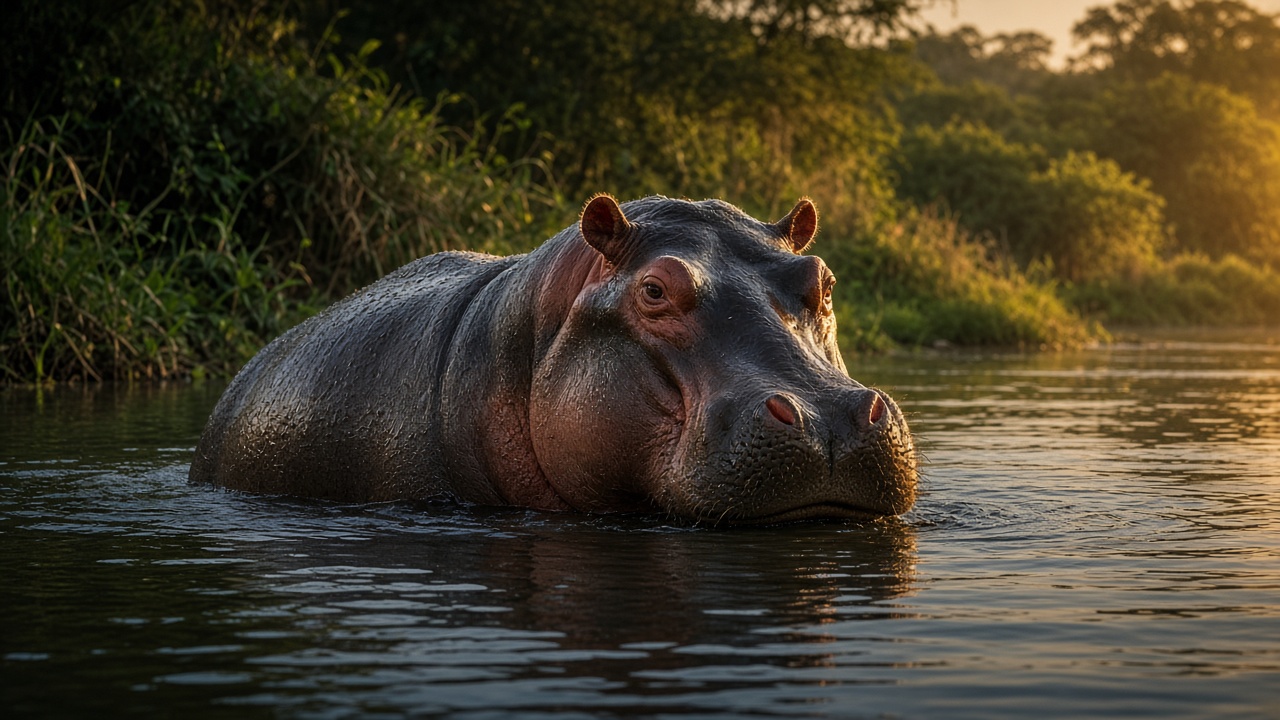
The notion that hippopotamuses are ruthless man-eaters is a sensational distortion that has embedded itself in popular imagination, yet it stands in direct contradiction to the animal's documented ethology and ecological role. Hippos are overwhelmingly herbivorous, spending their nights grazing on grasses and their days wallowing in rivers and lakes to regulate body temperature. While they can display territorial aggression, particularly males defending aquatic space or females protecting calves, these responses are reactive rather than predatory. Fatal encounters with humans are almost invariably the result of people encroaching on the hippo's immediate environment rather than deliberate hunting. The data from African wildlife authorities shows that such incidents, though tragic, remain statistically rare compared to deaths from snakes, crocodiles, or even domestic livestock. This myth persists because a charging hippo makes for compelling footage, yet it misrepresents the species' fundamental nature as a large, mostly passive grazer.
Structural Mechanics
The core reason hippos do not function as man-eating predators lies in their physiology and digestive anatomy, which evolved for a strictly vegetarian diet of short grasses and aquatic plants. Their massive three-chambered stomach and elongated intestines process fibrous vegetation, not flesh, rendering them inefficient at metabolizing meat even if it were consumed. Behaviorally, hippos operate on a strict crepuscular rhythm: nocturnal foraging on land followed by diurnal rest in water, minimizing overlap with human activity unless villagers or fishermen intrude at dusk or dawn. Their canine teeth, often cited as evidence of carnivory, serve primarily as display and combat tools within intraspecific dominance hierarchies rather than for subduing prey. Territorial charges are bluff displays meant to intimidate rather than pursue, and hippos rarely leave the water to track humans across distances. These mechanics reveal an animal optimized for sedentary bulk feeding and localized defense, not the active predation required of a man-eater.
Deconstructing the Counter-Argument
Claims that hippos rank among Africa's most dangerous animals conveniently ignore context and comparative statistics, collapsing once examined against actual human-wildlife conflict data. Proponents of the monster narrative cherry-pick isolated maulings while disregarding that most victims had violated the animal's personal space by approaching too closely in boats, fishing in restricted waters, or walking along riverbanks at night. Unlike true predators such as lions or leopards that actively stalk and consume humans, hippos do not incorporate people into their diet; post-incident examinations show injuries result from crushing bites or trampling during escape, not consumption. The exaggeration serves tourism marketing and sensational media that profit from fear, yet it distracts from genuine conservation threats like habitat loss and poaching that actually endanger hippo populations. This counter-narrative fails because it conflates defensive capability with predatory intent, a logical error that evaporates under empirical scrutiny of stomach contents, movement patterns, and incident reports.
Concrete Proof and Dynamics
Field studies across the Zambezi, Nile, and Congo basins demonstrate that hippos coexist with local human populations for generations when given adequate space, offering tangible proof against the man-eater label. In regions with traditional knowledge, communities avoid peak activity times and maintain buffer zones, resulting in near-zero conflict; contrast this with areas of recent encroachment where alarmist rhetoric replaces practical coexistence. Camera-trap and telemetry data reveal hippos routinely ignore nearby humans engaged in non-intrusive activities such as farming at safe distances, only reacting when directly threatened. Analogous dynamics appear in other large herbivores like elephants and Cape buffalo, where reputation for danger tracks human intrusion rather than inherent bloodlust. Operational records from wildlife reserves show that guided viewing from elevated platforms or vehicles produces zero attacks, further illustrating that the so-called monster emerges only when people violate the hippo's clear boundaries.
Downstream Consequences
Perpetuating the man-eating hippo myth generates cascading harms that undermine both conservation efforts and human safety strategies across sub-Saharan Africa. Fear-driven policies encourage preemptive culling and poisoning of hippo pods, disrupting aquatic ecosystems where these animals function as keystone species by fertilizing waters with dung and maintaining channels through their movement. Local communities internalize exaggerated terror, leading to unnecessary confrontations that could have been avoided through education on timing and spatial respect. International funding for hippo protection diminishes as donors perceive the species as a perpetual threat rather than a vulnerable herbivore facing population declines from illegal ivory trade in teeth. The secondary effect ripples into broader wildlife perception, where nuanced management yields to blanket eradication campaigns that destabilize entire food webs and diminish ecotourism revenue that could support coexistence.
The Settled Verdict
The evidence from anatomy, behavior, long-term field observation, and conflict statistics settles the matter beyond reasonable dispute: hippos are not man-eating monsters but large, territorial herbivores that pose risks only when their space is invaded. The myth survives through cinematic appeal and intellectual laziness, yet it dissolves under any serious examination of the data. Accepting this reality demands a shift from fear-based narratives to practical education on respectful boundaries, allowing both species to share landscapes without needless loss of life. Those who cling to the monster trope reveal more about their own appetite for drama than about the animal itself. In the end, the hippopotamus remains what it has always been: an impressive grazer deserving of distance and understanding rather than hyperbolic dread.